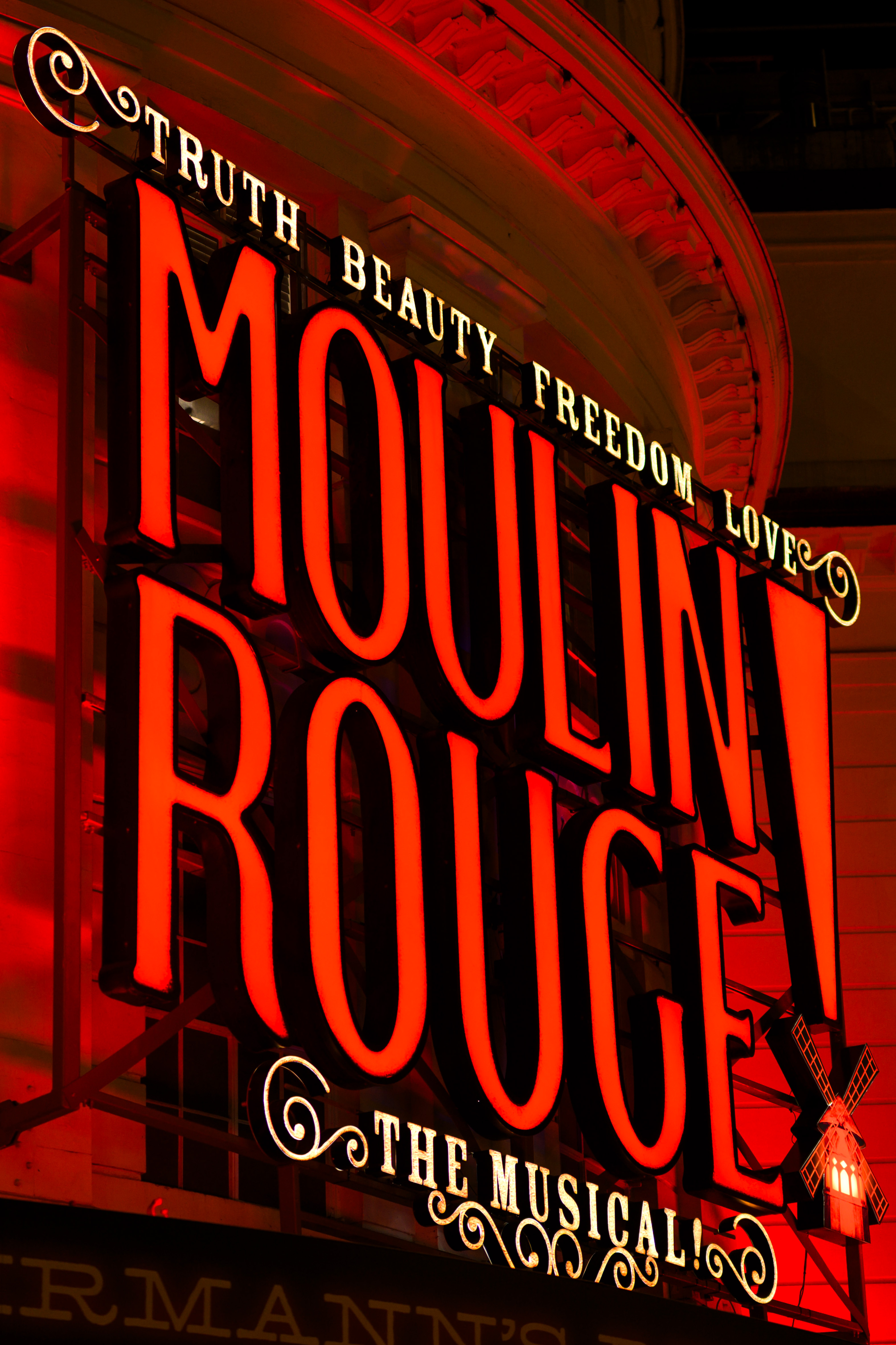
Text & Photography by Malgorzata Rudewicz
There are evenings when you put your pen down, knowing that if you start taking notes, you will miss something more important — an emotion.

I took out a sheet of paper and a pen. I wanted to jot down keywords, moments, impressions. After a few minutes, however, I realized I was doing something against what was actually happening. I placed the paper on my lap. Not now. This performance demanded presence, not documentation. I decided that this time I would let it pass through me completely — without notes, without stopping, without control.

And then the music arrived.
But before I name it, space had already arrived.
The auditorium was immersed in red — deep, dense, almost monochromatic. Rows of soft, plush seats formed a rhythmic landscape. The red of the upholstery flowed seamlessly into the red of the stage, the lighting, the décor. There was no clear boundary between the audience and the stage — everything belonged to a single world.
On the left appeared a recognizable symbol: a theatrical windmill, illuminated, as if taken from another era. On the right — the head of an Indian elephant, rendered in a broken, cool shade of blue. This color did not disrupt the red. On the contrary — it sharpened it. It created tension, a counterpoint, a pause before movement.
The scenography was not a backdrop. It was a living organism. It shifted fluidly, almost imperceptibly, guiding the viewer through successive images. Each transformation had meaning, rhythm, and weight. Light sculpted the space like a form — sometimes highlighting details, at other times leaving them in half-shadow. Nothing was accidental. Nothing was empty.

Music, scenography, and choreography functioned as one body. The dancers’ movement did not illustrate the sound — it extended it. Bodies responded to rhythm, light followed tension, and the stage space changed precisely when emotion changed. Everything was synchronized, cohesive, intense.
What I watched carried the spirit of a French cabaret house — sensual, theatrical, deliberately excessive. Yet the storytelling was distinctly British. With distance. With humor. With intelligent control of form. I felt the London stage in it — and its characteristic magic: one that doesn’t shout, but draws you in.
The music was not a background but the force driving the entire experience. The bass was not so much heard as felt — in the chest, in the breath, in muscular tension. Voices appeared in layers: clean, precise, guided with deep awareness of the stage. This was not “musical singing.” This was acting through voice.

The character of Satine became the natural center of the story. Her presence was magnetic, never excessive. Her voice — both strong and fragile — carried the audience effortlessly. Every phrase mattered. Every pause was a decision. In silence, there was as much tension as in the climaxes.
Duets and ensemble scenes only intensified this effect. Voices met, collided, sometimes provoked, sometimes softened the tension. Familiar musical motifs ceased to be quotations — they became movement, emotion, narrative.
I am not a great fan of musicals. And yet Moulin Rouge! The Musical left a powerful impression on me. It is a tightly crafted, intense spectacle, built on a grand scale — one in which nothing is accidental: not the light, not the sound, not the space.

Deservedly so — the production was honored with ten Tony Awards in 2021, confirming its exceptional position on the global musical stage.
I recommend it wholeheartedly. As an experience. As a moment of escape from everyday life. As an entry into a world that, for a brief while, raises the temperature of everything around it.
And yes — I would very happily see it again.


Photography during the performance was not permitted.
The images capture the atmosphere, symbols and visual language surrounding the spectacle.